Builder Left Your Backyard Bare?
You moved into a new build in Boise, Eagle, Garden City, Meridian or Kuna. Your builder sodded the front yard and left the backyard unfinished. The front looks great. The back is dirt, rocks and whatever the construction crew left behind.
You’re in good company. Many Treasure Valley homebuilders install front yard sod as part of the home package but leave the backyard unfinished to reduce the purchase price.
So what will it cost to finish the back? The honest answer is that it depends on your yard. Below we walk through everything we look at when we put together a sod bid for a new-home backyard, and what makes each item cost more or less. By the end, you’ll have a good idea of where your yard falls.
Want a real number for your yard?
Or call 208-398-0357.

This is what a lot of builders leave behind: bare dirt. Before any sod goes down, we pull out weeds and construction debris, break up the compacted soil, then cultivate and level the yard, adding topsoil only when it’s genuinely needed.
Why We Don’t Publish a Price per Square Foot
A per-square-foot number sounds helpful, but it can mislead you in either direction. It can make a job sound cheaper than it will be if your yard needs a lot of prep, or more expensive than it needs to be if your yard is ready to go. Two new-build backyards the same size on the same street can need very different amounts of work. So instead of a number, here’s what actually sets the price.
What Sets the Price of Sodding a New-Build Backyard
1. Yard size and shape
This is the most straightforward factor. More lawn means more sod, more prep and more labor.
- Costs less: a smaller yard, or a big open rectangle that’s quick to prep and lay.
- Costs more: a larger yard, or one with tight corners, curves, obstacles and several separate areas to fit.
2. What the builder left behind
New-build backyards come in all conditions. Some are clean, bare dirt. Others have rocks, chunks of concrete, wood scraps, nails, weeds and hard, compacted fill from construction traffic. All of that has to be dealt with before sod goes down, or it causes dry spots and weak roots later.
- Costs less: clean, bare dirt. A bare backyard with nothing to remove is often the most straightforward starting point we see.
- Costs more: lots of rock or construction debris to pull out. Removing weeds and ordinary debris is part of our standard sod scope; heavy debris and rock add time and cost.
3. Grading and leveling
Every sod job gets cultivated and leveled. For smaller projects we prep the soil by hand; for larger lawns we bring in a cultivator, which breaks up compaction and creates a clean, level surface for the sod.
- Costs less: a yard that’s already close to grade and just needs leveling.
- Costs more: a yard that needs a lot of reshaping. Heavy grading bundled with a sod job is quoted separately.
4. Soil prep and topsoil
Much of the Treasure Valley has thin or poor topsoil with clay underneath, which can restrict drainage and make it harder for roots to establish. Where the existing soil isn’t suitable for sod, we bring in fresh topsoil and work it in before installation.
- Costs less: soil that’s workable as is. Not every yard needs topsoil, and we only include it when it’s genuinely necessary.
- Costs more: a yard that needs topsoil. The more it needs, the higher the cost. It’s not a step we skip to lower a number, because it makes a real difference in how your lawn performs for years.
5. Old sod or rock removal (if any)
Most new-build backyards don’t have an old lawn to tear out. Some do have landscape rock, leftover sod scraps or a patchy start that needs to come out first.
- Costs less: nothing to remove.
- Costs more: existing sod or rock that has to come out before new sod goes down.
6. Sprinklers
Sprinklers go in before sod.
- Costs less: a backyard that already has a sprinkler system. Testing and adjusting it, setting each head to the right depth for the new sod and setting the timer for new sod are all part of our standard scope.
- Costs more: a backyard with no sprinklers yet. We design and install custom sprinkler systems, and a new system is quoted separately. Any digging for sprinklers needs a utility locate through Idaho DigLine first. Learn more about our irrigation services.
7. Access and fence panels
Sod is heavy, and we want it as close to your backyard as we can get it. We drive the sod in with equipment, and if a fence is in the way, we may need to remove a fence panel to make room. We handle that.
- Costs less: easy access, like an open side yard or a wide gate. It keeps the job efficient.
- Costs more: tight side yards, narrow gates and fences add time and labor.
8. Haul-off
Whatever comes out of your yard has to go somewhere.
- Costs less: little or nothing to haul away.
- Costs more: construction leftovers, rock or old sod that has to be hauled off.
9. Season
Time of year affects the scope of a sod job.
- Spring and fall are the easiest conditions for new sod.
- Summer installs take far more water and closer attention in the first weeks, and in some summer conditions we’ll advise you on whether a preventive fungicide makes sense.
- Winter installs work too. We watch the weather and schedule your install on the right days, and a winter install gets your backyard ready for spring. See laying sod in winter in the Treasure Valley.
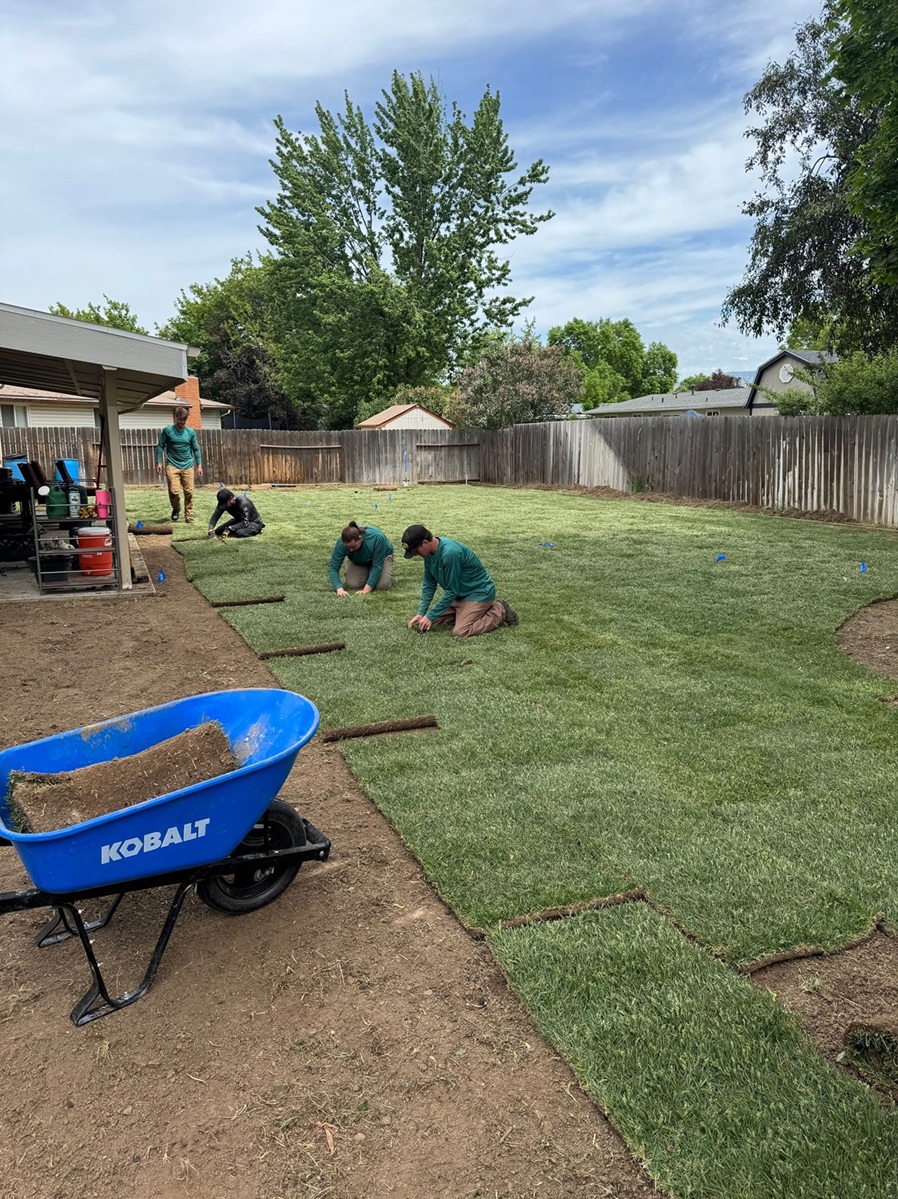
Once the ground is ready, our crew lays fresh Cloverdale Nursery sod, mends every seam flush against the soil and waters it in. Most of the cost factors above happen before the first roll goes down, and that prep is what sets a new lawn up for long-term health.
What’s Included in Every Sod Job
With every sod job, at no separate charge, we:
- Cultivate and level your existing soil
- Remove weeds and debris
- Test and adjust your sprinklers, and set the timer for new sod
- Mend the curled edges of each sod roll flush against the soil as we lay it, which prevents the checkerboard pattern of dead seams
- Come back for two follow-up visits: at around five days to check coverage and moisture, adjust watering and hand water any dry spots, and at fourteen days to confirm the roots have taken hold and set the timer back to a normal routine (on winter installs, the visits check rooting and watering)
Our sod comes from Cloverdale Nursery, which harvests fresh daily, so the sod going into your yard was cut that morning. Labor on a sod installation typically spans two to five days, depending on the size of the project and the amount of prep work involved.
Where Does Your Yard Fall?
- On the lower end: a smaller or simple-shaped yard, clean bare dirt, close to grade, workable soil, sprinklers already in, easy access and little to haul away.
- On the higher end: a larger or complicated yard, rock and construction debris, heavy grading, topsoil, a tight fenced backyard and a lot of haul-off.
- Quoted separately: a new sprinkler system, and heavy grading bundled with sod.
The fastest way to a real number is a free quote.
Or call 208-398-0357.
How to Measure Your Backyard
The best option: enter your address on our free quote page. You can measure your own yard right on the website.
Prefer to measure by hand? Use a tape measure or a measuring wheel:
- Break the yard into rectangles and measure the length and width of each in feet.
- Multiply length × width for each section and add them up.
- Leave out areas that won’t be lawn, such as patios and flower beds.
For example, a backyard 50 feet wide by 30 feet deep is 1,500 square feet. Take out a 12 × 10 foot patio (120 square feet), and you have about 1,380 square feet of lawn.
Sod vs. Seed: Why Sod Costs More Up Front
Seed is cheaper up front, but seeding a lawn in our dry, high-desert climate is slow and unpredictable, and it takes an entire growing season to look like a real lawn. Sod gives you an established lawn almost immediately. For spring and fall installations, most of our sod lawns are ready for normal activity and their first mow at around the two-week mark; very early spring installs may take closer to three weeks. Sod laid over the winter is in place and ready for spring.
After Installation
New sod depends on surface moisture until its roots reach the soil below, which is what our 5-day and 14-day visits are for. Watering changes with the season: summer takes far more water, spring and fall less, and winter much less. In winter, it’s an easy routine with a hose and sprinkler from your outdoor faucet. To see what’s normal in the first days, read why new sod turns brown and when to worry, and read our guide to sod installation in Boise for the full process.
Frequently Asked Questions
How much does it cost to sod a backyard for a new home?
Honestly, it depends on your yard: its size and shape, what the builder left behind, how much grading and topsoil it needs, whether sprinklers are already in, how easy it is to get sod into the backyard and how much has to be hauled away. That’s why we don’t quote a price per square foot. A per-foot number can make your job look cheaper or more expensive than it really is. The fastest way to a real price is a free quote, and you can measure your yard online right on our quote page.
My builder only sodded the front yard. Can you do the backyard?
Yes. Many builders leave the backyard unfinished, and that’s exactly the job we’re focused on in Boise, Eagle, Garden City, Meridian and Kuna. Elsewhere in the Treasure Valley? Ask us. Our standard sod scope includes cultivating and leveling your soil, removing weeds and debris, testing and adjusting your sprinklers, setting the timer for new sod and follow-up visits at around five and fourteen days.
Do I need to buy topsoil for my new backyard?
Not always. We assess your soil during the quote and only include topsoil when it’s genuinely necessary.
Do I need a sprinkler system before laying sod?
Sprinklers go in before sod. If you already have them, we test and adjust them and set the timer for new sod. If you don’t, we offer sprinkler system design and installation, quoted separately.
How long until we can use the backyard?
For spring and fall installations, most lawns are ready for normal activity and a first mow at around two weeks. Very early spring installs may take closer to three weeks. Sod laid over the winter is in place and ready for spring, when you’ll actually want to be out on it.
Can you sod my backyard this winter?
Yes. We watch the weather and schedule your install on the right days. If the ground’s frozen, we wait for a thaw. You don’t have to figure that out; we do. Read more about winter sod installs.
Let’s Finish Your Backyard
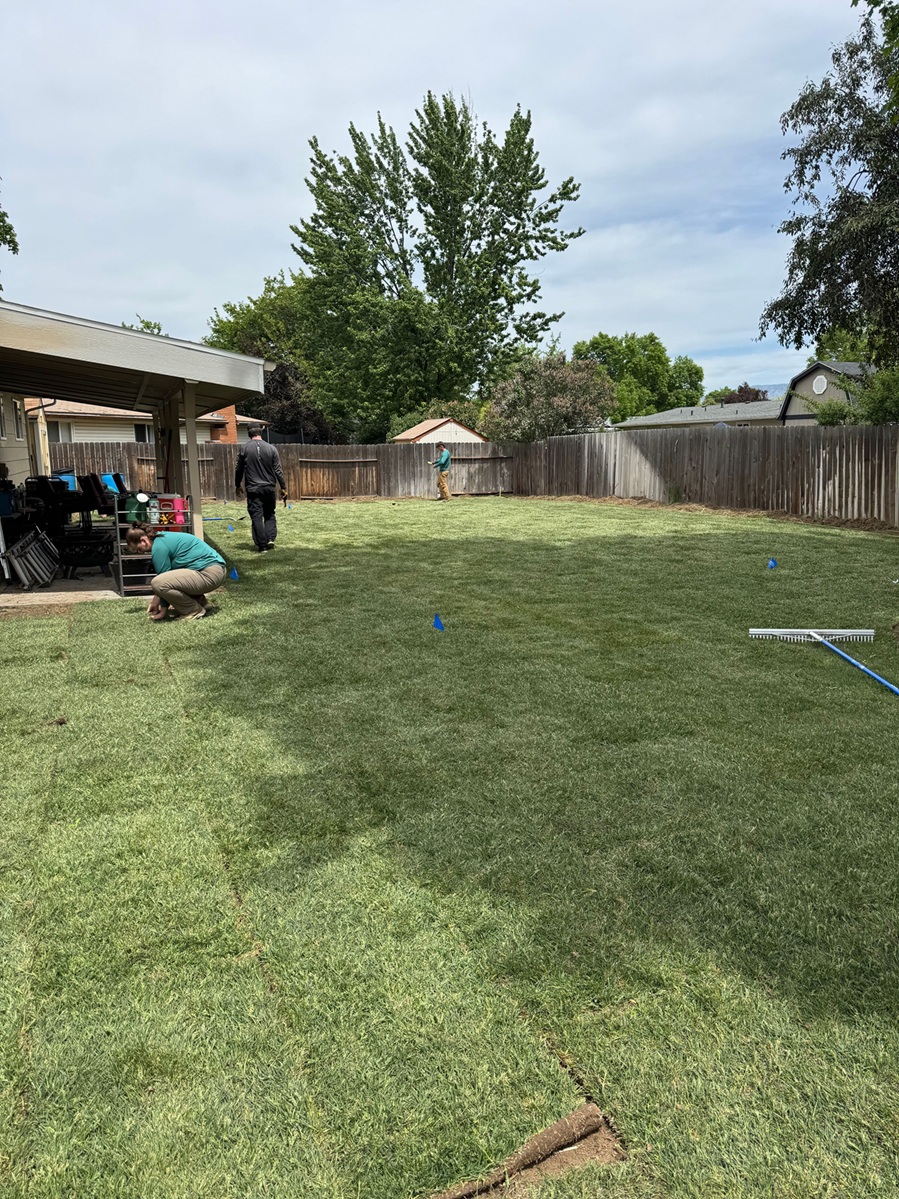
The finished result: a real lawn in the backyard, right away. Your builder did the front. We’ll do the back.
Alive & Green Lawn & Landscape is a local Treasure Valley company, not a national franchise. We install sod in Boise, Eagle, Garden City, Meridian, Kuna and across the Treasure Valley with proper ground prep, quality sod and clean installation that sets your lawn up for long-term health. Learn more on our Sod Installation page, or read about sod installation cost in Boise.
The fastest way to a real number is a free quote. Enter your address, measure your yard online and tell us what you’d like done.
Call 208-398-0357 · Email info@alive-green.com