If you’ve been staring at a bare backyard, a patchy lawn that’s seen better days, or a yard that was disrupted by a construction project, sod installation is one of the most satisfying upgrades you can make to your home. Within days you go from dirt or dead grass to a lush, green lawn — and done right, that lawn will look great for years.
But “done right” is doing a lot of work in that sentence. Sod installation in the Treasure Valley has some important nuances — the right grass variety, the right time of year, proper soil preparation, and an installation technique that most homeowners never think to ask about but that makes a visible difference within the first week. This post covers all of it.
Why Sod Instead of Seed?
The honest answer for most Boise-area homeowners is simple: time and results. Seeding a lawn in our arid, high-desert climate is a slow, unpredictable process. It requires consistent moisture during germination, is vulnerable to wind, birds, and foot traffic, and takes an entire growing season to look like a real lawn. Sod, by contrast, gives you an established lawn almost immediately. You lay it, you water it, and within two weeks you have a lawn you can walk on, mow, and enjoy.
Sod also handles Boise’s climate better during establishment. Our summers are hot and dry, and bare soil or sparse seedlings struggle in those conditions. A roll of sod arrives with an already-established root system and a layer of living grass that can handle the heat — provided it’s watered correctly.
For homeowners with new construction homes, bare backyards are extremely common in the Treasure Valley. Builders routinely install front yard sod as part of the home package but leave the backyard unfinished to keep costs down. If that’s your situation, sod is almost always the right call — it’s the fastest path to a usable backyard.
The Best Time to Install Sod in the Treasure Valley
Sod can be installed virtually any time the ground isn’t frozen — which in Boise means roughly April through October. But the best results come from spring and fall installations, and here’s why.
Spring (April through early June) and fall (September through October) give newly installed sod the ideal conditions for rooting: moderate temperatures, longer moisture retention in the soil, and no extreme heat stress. Cool-season grasses — which are the grasses we install here — establish their root systems fastest when soil temperatures are in that comfortable middle range, not battling 100-degree July afternoons.
Summer installations absolutely happen and they work fine — but they require more attentive watering and a bit more care in those first weeks. Heat is the enemy of new sod, particularly when it hasn’t yet rooted deeply enough to access moisture below the surface. We’ve installed plenty of summer lawns successfully; it just means staying on top of watering and being intentional about it.
Fall is actually an underrated time to install. Cooler temperatures, shorter days, and the natural moisture of autumn create near-perfect rooting conditions. Many homeowners don’t think to call in September or October, but if your yard needs sod and you missed spring, fall is an excellent window.
Choosing the Right Grass: Kentucky Bluegrass vs. Tall Fescue
In the Treasure Valley, there are two grass types you’ll want to consider for sod installation. We source all of our sod from Cloverdale Nursery, a Boise institution that has been growing turf right here in the valley for over 50 years. Because it’s grown locally, it’s already acclimated to our soil, our water, and our climate — which matters more than most people realize.
Here’s how the two varieties compare:
Kentucky Bluegrass / Perennial Rye Mix
This is the classic Treasure Valley lawn grass — the lush, deep green turf you picture when you imagine a beautiful front yard. Kentucky bluegrass establishes quickly, handles cold winters well, and produces a dense, attractive lawn with good resilience. The perennial ryegrass in the blend provides additional protection during summer heat, reducing the risk of disease and insect issues that pure bluegrass can face during Boise’s hottest months.
This blend is what most homeowners in the area choose, and for good reason — it looks great and performs well across the full range of Treasure Valley seasons.
TTLF — Tall Turf Lawn Fescue
Tall fescue is the right choice if heat tolerance, drought resistance, and durability are your priorities. It handles heavy foot traffic exceptionally well, making it a strong option for families with kids and dogs, or properties where the lawn gets a real workout. It’s also more forgiving during hot summers if your irrigation isn’t perfectly dialed in.
Tall fescue has a slightly coarser texture than bluegrass and a somewhat different appearance, but it’s a tough, attractive, low-stress lawn grass that performs reliably in our climate. Cloverdale cuts tall fescue on an as-needed basis, so just plan for a 24-hour lead time when ordering.
Not sure which is right for your yard? When we come out for a quote, we’ll talk through your specific situation — sun exposure, how the yard gets used, and your watering setup — and give you a straight recommendation.
What the Installation Process Actually Looks Like
Every sod job starts a little differently depending on what’s there when we arrive. A bare backyard on a new construction home is a different starting point than a tired old lawn someone wants to replace, or a spot where a tree or fence used to be. Here’s how we approach it.
Preparing the Ground
The first step is clearing the area — removing any existing vegetation, weeds, rocks, and debris. For smaller projects we do this by hand. For larger lawns we bring in a cultivator, which removes existing vegetation and works the soil simultaneously, breaking up compaction and creating a clean, level surface for the sod to go down on.
Soil quality in the Treasure Valley tends to be a challenge. Much of the valley has poor topsoil with a significant clay content underneath, which can restrict drainage and root growth. Where the existing soil isn’t up to the task, we bring in fresh topsoil and work it in before installation. Whether topsoil is needed depends on what’s already there — we assess it during the quoting process and include it in your estimate if it’s necessary.
One step we always handle carefully is sprinkler head height. As we prep the soil and build up the grade, we adjust each sprinkler head to make sure it ends up at the right depth once the sod is laid on top — close enough to the surface to deliver water effectively, but recessed enough that it’s not a hazard for people playing or walking on the lawn.
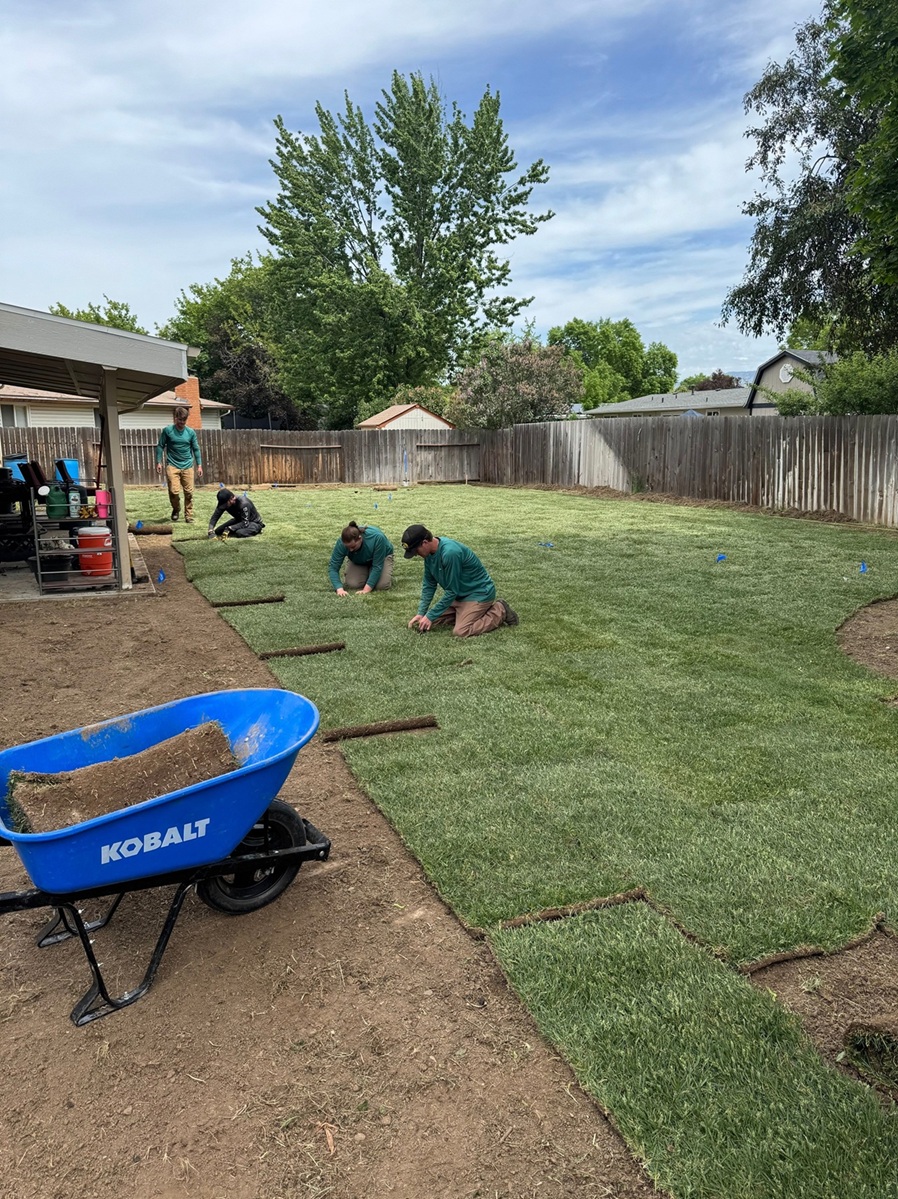
Laying the Sod — and Why Technique Matters More Than You’d Think
Here’s where we do things differently, and it’s worth explaining because the difference is visible within a week of installation.
Sod in Idaho is delivered in rolls. When those rolls are cut and transported, the leading edges naturally curl upward and hold that curved shape for a period of time after they’re unrolled. Most installers lay the sod down and move on. We don’t.
Our team manually works each edge down — pressing and mending those curled edges flush against the soil as we go. It takes more time and more labor, but it solves a problem that ruins a lot of freshly installed lawns. When sod edges curl up, the underside of the sod along those edges loses contact with the soil. No soil contact means no moisture, which means no root growth in those spots, which means the edges dry out and die.
About a week after an installation where this wasn’t done, you start to see it: a checkerboard pattern across the lawn where every seam between rolls has a visible line of brown, dead grass. It’s one of the most common complaints homeowners have after a sod job, and it’s entirely preventable. Cody, who leads our sod installations and brings years of experience in professional turf management, developed this as a non-negotiable part of our process. The results speak for themselves — our lawns look dramatically better at the one-week and two-week mark than lawns installed without this step.
We lay sod in a staggered, brick-like pattern so that the seams between rows don’t line up in long continuous lines, which further reduces edge visibility as the lawn establishes.
After Installation: Watering, Walking, and Mowing
Watering New Sod
The first two weeks are the most critical. New sod doesn’t yet have roots reaching into the soil beneath it, which means it’s entirely dependent on surface moisture to stay alive. The goal during this period is to keep the soil consistently moist — not soaking wet, but never dry.
Part of our installation service is adjusting your sprinkler timer to a watering schedule appropriate for new sod. This is not the same schedule you’ll use once the lawn is established, and it’s definitely not the same as your summer watering schedule for a mature lawn. Getting this dialed in correctly from day one is one of the most important things we do.
For summer installations, heat adds an additional challenge. When temperatures are high, new sod can dry out faster than a standard watering schedule keeps up with. We’ll walk you through what to watch for and adjust accordingly during those first critical weeks.
When Can You Walk on It, Let the Dog Out, and Start Mowing?
For spring and fall installations — which are our ideal conditions — most lawns are ready for normal activity and their first mow at around the two-week mark. Very early spring installations, when soil temperatures are still on the cool side, may take closer to three weeks to reach that point. The lawn tells you when it’s ready: the sod should feel firmly rooted and resist pulling back when you tug gently at a corner. Footprints that spring back rather than staying compressed are another good sign.
We teach every client how to do this simple check so you’re not guessing. And when your lawn is ready for its first mow, we’d love to be the ones to do it — our weekly lawn maintenance service is available throughout Boise, Meridian, Eagle, Garden City, and Kuna, and many of our sod clients become regular mowing clients. It’s a natural fit.
A Note on Summer Installations: Heat and Fungus
If you’re having sod installed during the height of a Boise summer, there are two things worth being aware of: intensive watering requirements and the small but real possibility of fungal issues.
Heat-of-summer sod needs more water, more often, particularly in the first two weeks. We set your timer accordingly. The flip side is that consistently wet conditions in warm weather can occasionally create conditions where fungus can develop. This isn’t common, but it does happen, and it’s manageable. If we’re installing in summer conditions where it could be a concern, we’ll advise you on whether a preventative fungicide application makes sense and exactly when to apply it. This is entirely an if — spring and fall installations in our climate rarely need to worry about it at all.
Sod Installation Service Areas
Alive & Green installs sod throughout the Treasure Valley, including Boise, Meridian, Eagle, Garden City, Kuna, Nampa, and Caldwell. No matter where you are in the valley, if you need a new lawn, we can make it happen.
Ready to Get a Quote?
Every sod job is different — yard size, existing conditions, grass variety, and time of year all affect the scope and the price. The best first step is a conversation. We’ll come out, take a look at your yard, talk through your options, and give you a straightforward quote with no surprises.
Give us a call or request a free quote online. Cody and the team are ready to put in the work that gets your lawn off to the right start.
1-208-398-0357
Request a free quote at Alive-Green.com